Knee replacement surgery is a major step toward restoring mobility and reducing chronic joint pain. However, post-surgical knee pain is common and can be discouraging for many patients.
A study in The Bone & Joint Journal found that up to 20% of patients report ongoing pain six months after knee replacement. Proper care and rehabilitation are crucial to manage discomfort and regain function.
In this article, you’ll find out why knee pain persists after knee replacement, how to distinguish between normal recovery pain and warning signs, and which strategies, including physiotherapy, can accelerate your recovery.
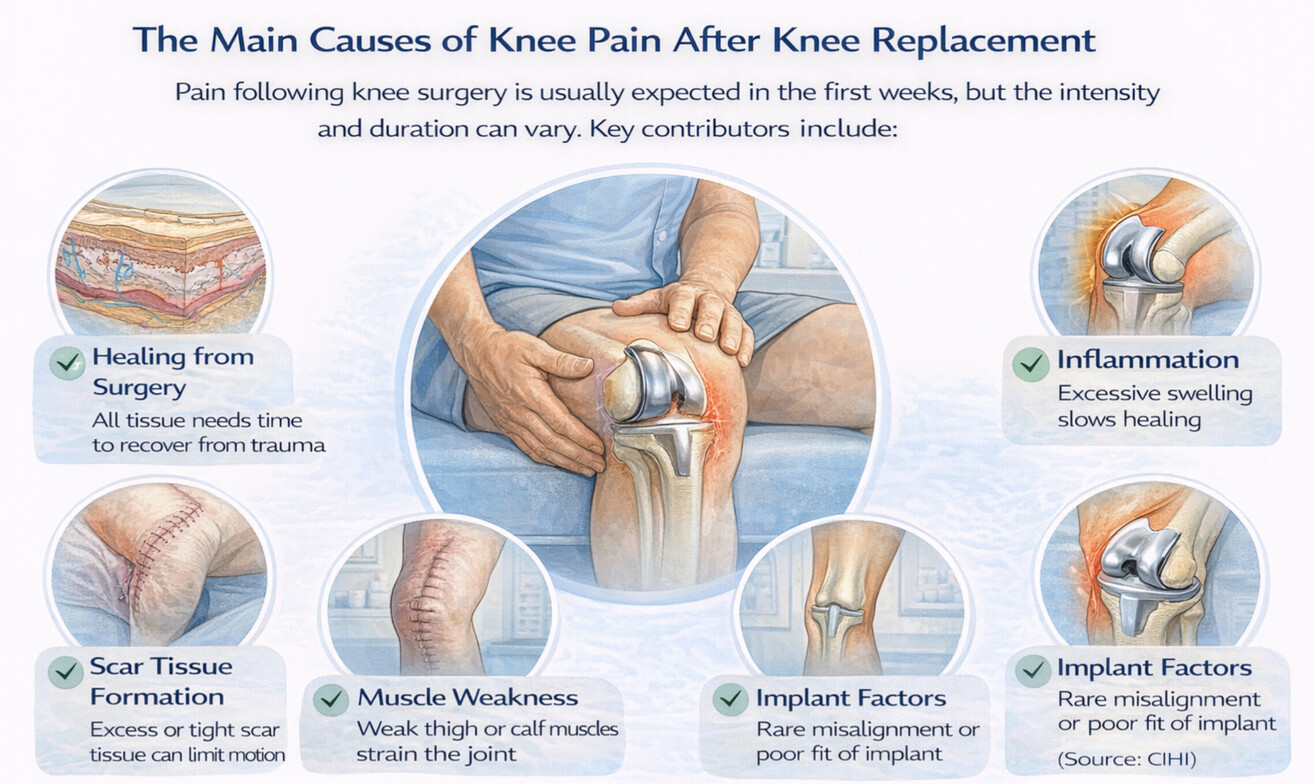
The Main Causes of Knee Pain After Knee Replacement
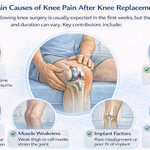
Pain following knee surgery is usually expected in the first weeks, but the intensity and duration can vary. Key contributors include:
-
Healing from surgery: All tissue—skin, muscle, bone—needs time to recover from surgical trauma.
-
Inflammation: Swelling is a natural response, but significant inflammation can slow healing.
-
Scar tissue formation: Excess or tight scar tissue may restrict motion or create discomfort.
-
Muscle weakness: Weak thigh or calf muscles often put more strain on the joint, amplifying pain.
-
Implant factors: In rare cases, improper implant fit or alignment can lead to persistent symptoms.
-
Complications: Infection or blood clots require prompt attention. According to the Canadian Institute for Health Information, infection is behind 32.5% of knee revisions post-surgery.
Who Is Most Likely to Experience Post-Operative Knee Pain?
While everyone recovers differently, certain factors can increase the likelihood of discomfort:
-
Pre-existing pain conditions such as arthritis or chronic lower limb issues
-
Complicated surgeries or delayed healing
-
Reduced mobility or swelling after surgery
-
Difficulty sticking to a rehabilitation plan
“Knee pain is common in the first several weeks after replacement, but with structured rehab it often improves steadily,” says Hetal Joshi, Registered Physiotherapist at Therapointe Physiotherapy. “Timely assessment makes a real difference.”
How Long Should Pain Last After Knee Replacement?
Post-surgical knee pain tends to follow a general timeline:
-
First 2–4 weeks: Pain usually peaks and then begins to decrease
-
By 3 months: Most patients notice significant improvement in daily activities
-
Up to 12 months: Low-level stiffness or discomfort is still possible, especially after increased activity
If pain is severe, persistent, or worsening after the initial healing period, further assessment is advised.
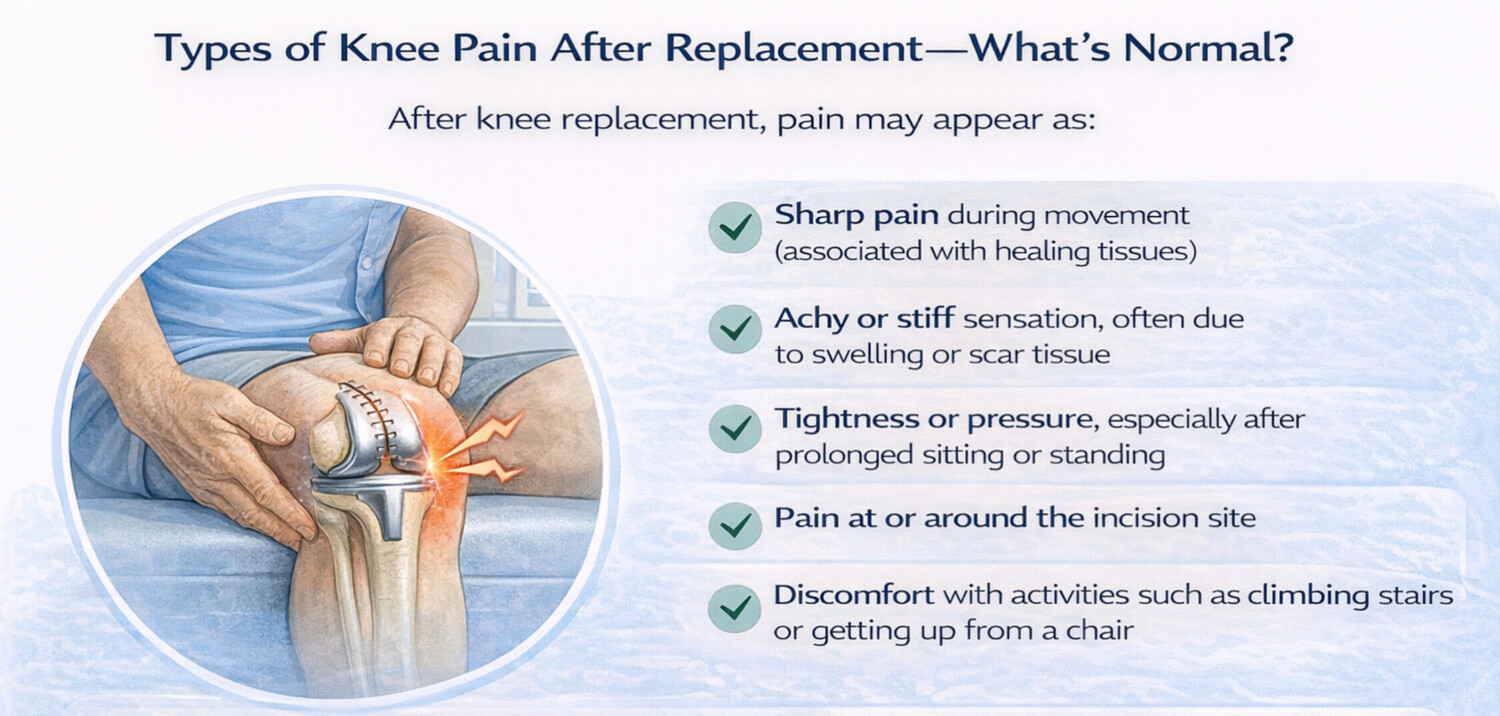
Types of Knee Pain After Replacement—What’s Normal?
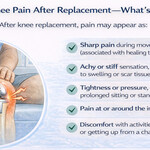
After knee replacement, pain may appear as:
-
Sharp pain during movement (associated with healing tissues)
-
Achy or stiff sensation, often due to swelling or scar tissue
-
Tightness or pressure, especially after prolonged sitting or standing
-
Pain at or around the incision site
-
Discomfort with activities such as climbing stairs or getting up from a chair
Tracking when and how pain occurs can help health providers customize your rehabilitation.
Practical Strategies for Managing Knee Pain After Surgery
Effective pain management and faster recovery rely on a combination of approaches:
-
Follow your surgeon’s instructions for medication, mobility, and wound care.
-
Use ice packs for 15–20 minutes several times a day to help with swelling.
-
Elevate the affected leg above heart level to decrease fluid buildup.
-
Complete your prescribed home exercises to promote strength and flexibility.
-
Attend physiotherapy for guided progression and tailored support.
When Should You Seek Physiotherapy for Post-Replacement Knee Pain?
Consider booking with a physiotherapist if you experience:
-
Persistent pain affecting daily activities or sleep two weeks post-surgery
-
Ongoing swelling, redness, or warmth around the knee
-
Difficulty achieving key movement goals (straightening/bending the knee)
-
Reduced confidence in returning to work, hobbies, or daily life
Professional assessment enables earlier intervention and more targeted therapy.
Table: Normal vs. Concerning Knee Pain After Replacement
|
Symptom |
Typical During Recovery (First Weeks) |
Requires Prompt Attention |
|
Mild swelling |
Yes |
Yes, if swelling is severe or ongoing |
|
Achiness or stiffness |
Yes, with gradual improvement |
Yes, if stiffness worsens or the knee locks |
|
Sharp pain on movement |
Yes, should decrease over time |
Yes, if pain is sudden, severe, or spreading |
|
Redness at incision |
Mild and fading |
Yes, if redness increases or is accompanied by heat/discharge |
|
Difficulty bearing weight |
Briefly after surgery |
Yes, if you cannot walk or stand after the first weeks |
How Therapointe Physiotherapy Supports Your Recovery
Therapointe Physiotherapy in South Edmonton offers:
-
Individualized physiotherapy programs to restore joint mobility and strength
-
Additional services like massage therapy and acupuncture to address pain and swelling
-
Customized exercise plans for safe at-home progress
-
Patient education for long-term knee health
Patients often highlight Therapointe’s clinical expertise and approachable care. The clinic welcomes AISH clients, processes direct billing, and has same-day bookings seven days a week.
Best Practices to Prevent Persistent Knee Pain
To reduce the risk of long-term discomfort:
-
Attend regular physiotherapy follow-ups.
-
Report new or worsening knee symptoms to your healthcare provider immediately.
-
Progress exercises as recommended by your rehabilitation team.
-
Stay physically active within prescribed limits.
When to Contact a Healthcare Provider Immediately
Call your doctor or care provider if you have:
-
Sudden, severe knee pain or new swelling after initially improving
-
Signs of infection, such as fever, chills, or pus at the incision site
-
Persistent inability to move or put weight on the knee
-
New numbness or tingling sensations in the leg
Timely intervention can prevent more serious complications.
Ready to move with confidence after knee replacement? Book an appointment with Therapointe Physiotherapy in South Edmonton for personalized recovery support—open seven days a week, with accessible care for all patients.
|
More articles you might like: |
Frequently Asked Questions (FAQ)
Is it normal to have some pain months after a knee replacement?
Mild aches or stiffness are common for up to 12 months. Persistent or worsening pain should be evaluated.
How does physiotherapy help after knee replacement?
Physiotherapy supports safe restoration of knee movement, muscle strength, and balance, reducing discomfort and helping you return to normal activities faster.
What should I avoid after knee replacement surgery?
High-impact exercise and heavy lifting should be avoided until you receive medical clearance.
Does Therapointe offer direct billing and AISH support?
Yes, Therapointe processes direct billing and welcomes AISH clients for accessible care.
What if my pain unexpectedly worsens weeks after surgery?
Contact your healthcare provider or physiotherapist to rule out infection or other complications.

admin
Contact Me