
Whiplash injuries are common, with as many as 80,000 reported in Canada every year. They most often occur after a car accident or sudden impact. They affect the neck and upper back, often causing pain, stiffness, and sometimes other symptoms like headaches or dizziness.
One of the most common questions we hear from patients at Therapointe Physiotherapy is: "How long should I be off work after whiplash?"
“The answer is not one-size-fits-all,” according to Hetal Joshi, Registered Physiotherapist at Therapointe Physiotherapy. “It depends on the severity of your injury, the type of work you do, and your personal healing process.”
This guide will help you understand what influences recovery time and how to approach returning to work safely and confidently.
What Is Whiplash and How Does It Affect You?
Whiplash happens when the head is suddenly jolted backward and then forward, damaging muscles, ligaments, and soft tissues in the neck. Symptoms vary from mild discomfort to intense pain and limited movement.
Common symptoms include:
-
Neck pain and stiffness
-
Headaches
-
Shoulder or upper back pain
-
Dizziness or blurred vision
-
Fatigue and difficulty concentrating
‘Whiplash-associated disorder’ (also called ‘WAD’) are graded on the basis of the severity of symptoms. You may be diagnosed with WAD I, Wad II, or WAD III depending on the severity of your injuries (WAD I is least severe).
Factors That Influence Time Off Work After Whiplash
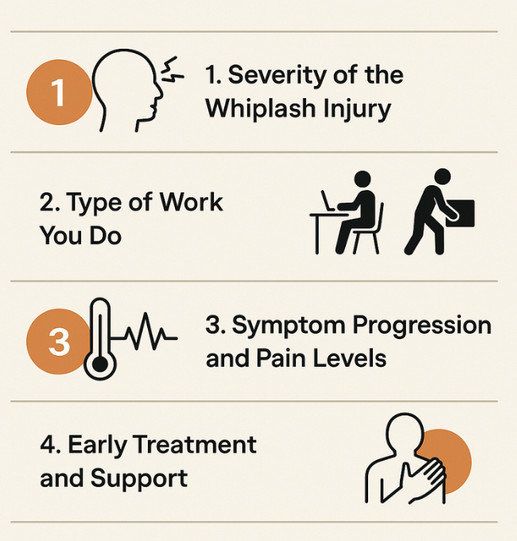
Recovery time varies, but several key factors help determine how long you may need before returning to work:
1. Severity of the Whiplash Injury
Mild cases might only need a few days of rest, while moderate to severe injuries can require several weeks or months of recovery and rehabilitation.
2. Type of Work You Do
-
Desk jobs or light duties: You may return sooner, possibly within days or a week, especially if your employer offers modified work options.
-
Physically demanding jobs: Lifting, heavy equipment, or repetitive motions often require longer healing time to avoid aggravating the injury.
3. Symptom Progression and Pain Levels
If pain decreases steadily and movement improves, it’s usually a good sign you can start easing back into work. Persistent or worsening symptoms signal the need for more time and possibly additional treatment.
4. Early Treatment and Support
Starting physiotherapy soon after the injury can speed recovery and help manage pain more effectively. Delays in care can prolong symptoms and time away from work.
Typical Time Frames: What to Expect
While everyone heals differently, here are general guidelines based on common whiplash cases:
- Mild whiplash - A few days to 1 week
- Moderate whiplash - 2 to 6 weeks
- Severe whiplash - Several weeks to 3 months or more
Remember, these are averages. Your recovery plan should be tailored to your progress and your job demands.
How Physiotherapy Helps You Return to Work Sooner
Physiotherapy addresses pain, restores movement, and strengthens supporting muscles. At Therapointe Physio in South Edmonton, we offer a full range of services, including massage, vestibular therapy, and acupuncture that support gentle, steady recovery.
Physiotherapy will:
-
Guide you at a pace that feels comfortable
-
Improve neck mobility and reduce stiffness
-
Educate on posture and body mechanics to prevent reinjury
-
Recommend modifications or gradual return-to-work strategies
Our team works with you and, if needed, your employer to create a realistic plan that supports healing and work demands.
Returning to Work: Tips for a Safe Comeback
Getting back to work after whiplash requires patience and care. Here’s how to make your return successful:
-
Start with modified duties or reduced hours if possible
-
Take regular breaks to reduce neck strain
-
Use ergonomic setups, that include proper chair height, screen position, and supportive seating
-
Continue physiotherapy exercises at home as advised
-
Listen to your body, and don’t push through pain
-
Communicate openly with your employer about your needs and limitations
FAQs About Time Off Work for Whiplash
Q1: Can I work with whiplash if my job is mostly computer-based?
Yes, many people return quickly to desk work if symptoms are mild. Ergonomics and regular breaks are important to avoid worsening neck strain.
Q2: When should I see a physiotherapist after whiplash?
Early assessment within a few days can help reduce pain and improve recovery speed.
Q3: What if my symptoms don’t improve after a few weeks?
If pain or stiffness lingers, it’s important to follow up with your healthcare provider. Some may benefit from additional therapies.
Q4: Does whiplash always require time off work?
Not necessarily. Some may continue working with modifications. Time off depends on pain, mobility, and job requirements.
Q5: How do I know when I’m ready to return to full duties?
You should be able to perform your job tasks without significant pain or stiffness. Your physiotherapist can help assess readiness.
Q6: Can returning to work too early worsen whiplash symptoms?
Yes, returning before healing can cause setbacks. Follow your treatment plan and communicate with your care team.
If you’ve experienced whiplash, you don’t have to navigate recovery alone. At Therapointe Physiotherapy in South Edmonton, we’re here to support your healing and help you return to work safely. Reach out today for a consultation or same-day appointment — we’re open 7 days a week and accept direct billing, including AISH clients.
Together, we’ll build a plan that respects your pace and puts your well-being first.

admin
Contact Me